


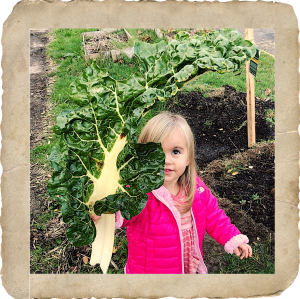
 Inspiring Curiosity
At Curious Gardeners, we aim to inspire curiosity. We encourage children to look closely at and think deeply about various aspects of their world, to ask questions and learn how to find answers together. Through this process, our students learn how to be responsible for their own learning, they learn that they love to learn, and they develop curious minds that will serve them well throughout their lives. As we investigate the things we are curious about, we tie in the following curricular themes:
Curricular Themes
 Gardening and Cooking
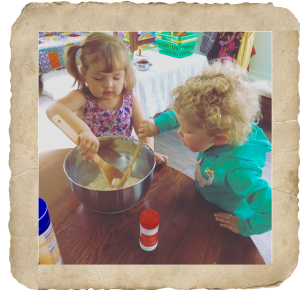
From growing it, to cooking it, to eating it, good food is our central theme at Curious Gardeners Preschool. Teacher Carly’s background is in school garden education, and she believes that caring for edible gardens helps children feel invested in the academic and life skills they learn in the process. If children know where food comes from and have the opportunity to grow their food, harvest it, help prepare it, and taste it together, they’re much more likely to eat and enjoy it. Gardening and cooking help children feel connected to healthy food, the earth, and their community. These sorts of experiences with healthy food are invaluable at the preschool age in particular and can help set kids on the path to leading a healthy, active life.
 Deep Dive into Themes at Circle Time
Our routine includes long blocks of uninterrupted time for play, during which our learning is self-directed, experiential, and hands-on. We set up our environment to encourage and enable children to take a closer look. At circle time, we inspire curiosity by taking a deep dive into a monthly curricular theme, getting kids excited about learning! We explore a variety of topics in movement-based, hands-on ways. Themes include things like Oceans, Human Body, Music, Outer Space, Fall, Geology, Plants, Dinosaurs, Love, Bugs, etc!
 Connection to the Natural World
Not only do we spend at least 3.5 hours outside everyday at Curious Gardeners, we encourage children to notice the world around them. As children learn about and have positive experiences in the natural world, they grow to love it. It is this connection to nature that we strive to cultivate at a time when our culture is becoming farther and farther removed from nature. The more connected to the earth children feel, the more they will want to protect it in the future. Place-based education advocate David Sobel says, “If we want children to become truly empowered, then let us allow them to love the earth before we ask them to save it.”
 Social and Emotional Development
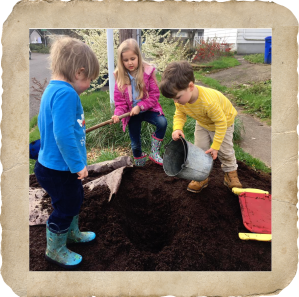
At Curious Gardeners, we strongly believe that one of the best ways for young children to learn is to interact with other young children. Through interacting with one another, they learn important social and self-regulation skills. They experiment with different ways to resolve conflict and learn to understand their own emotions as well as those of others. With younger students, these interactions start with as much teacher support as necessary to talk through and understand situations, and over time, children learn how to resolve interpersonal conflict on their own. We also learn about emotions and practice regulation skills regularly at circle time.
 Language and Literacy
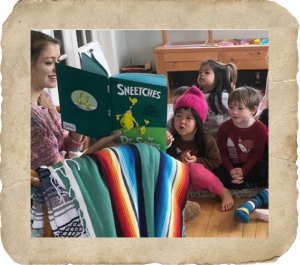
Before children can learn to read and write, they need to have many varied experiences with language. Curious Gardeners is a language-rich environment. We sing, tell stories, chant, read, and play with words daily. Teacher Carly is constantly checking out new books from the library as resources for children to explore their interests. We also work to develop children’s pre-writing skills by providing lots of opportunity for fine motor development.
 Music and Movement
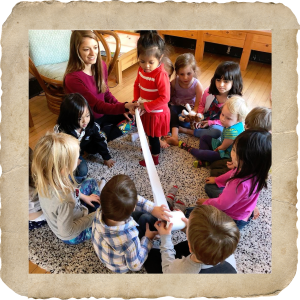
Teacher Carly grew up singing country music with her family, has performed in musicals and a cappella groups, and now sings in a three-part-harmony jazz band. She incorporates music into her daily interactions with children naturally, using song for everything from introducing new concepts to reminding kids of the steps for hand washing. We also incorporate movement into our classroom at every opportunity, doing animal yoga, pretending to be seeds growing roots and sprouting out of the ground, or simply putting on our favorite songs and dancing around with colorful scarves.
 Whole Process Exploration
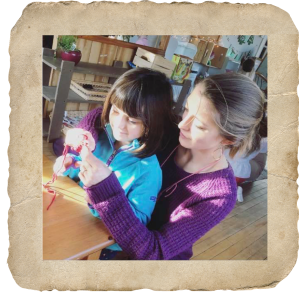
One way we inspire curiosity at Curious Gardeners is by allowing children to participate in the entire process of creating something they are familiar with. We might plant a pumpkin seed, watch the pumpkin grow, harvest the pumpkin, roast and puree the flesh, and finally use the puree to make pumpkin bread. We might start with raw wool, clean and card it, spin it into yarn and dye it. We might harvest apples from our apple tree, slice them, and dehydrate them to make apple chips. Experiencing these processes from start to finish gets children thinking about where things come from and why things are the way they are. These experiences cultivate curious minds and help children develop a deeper understanding of their world.
 Curious Gardeners Preschool